Download Mendeley
S -nitrosoglutathione reductase as a therapeutic target for diabetic vascular complications in rodent models.
Zhao, S., Song, T., Tang, X., Fan, C., Yang, Y., Zhang, Z., Xia, Y., Zhang, Y., Cao, J., Wang, Z., Shi, Z., Tang, X., Wang, D., Yin, G., Zhang, S., Gao, Y., Chen, H., Wang, L., Chen, F., Wang, H., Yu, B., Cao, Y., Sun, K., Liu, X., Wang, X., Yan, C., Han, Y., Han, Y., Xie, L., Ji, Y.(2025) Sci Transl Med 17: eadn9216-eadn9216
- PubMed: 41032622
- DOI: https://doi.org/10.1126/scitranslmed.adn9216
- Primary Citation of Related Structures:
8GV3 - PubMed Abstract:
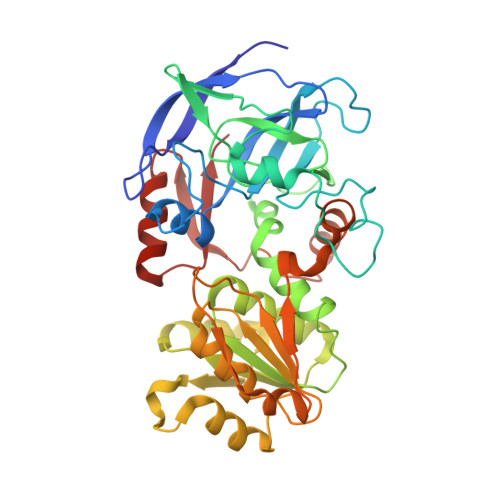
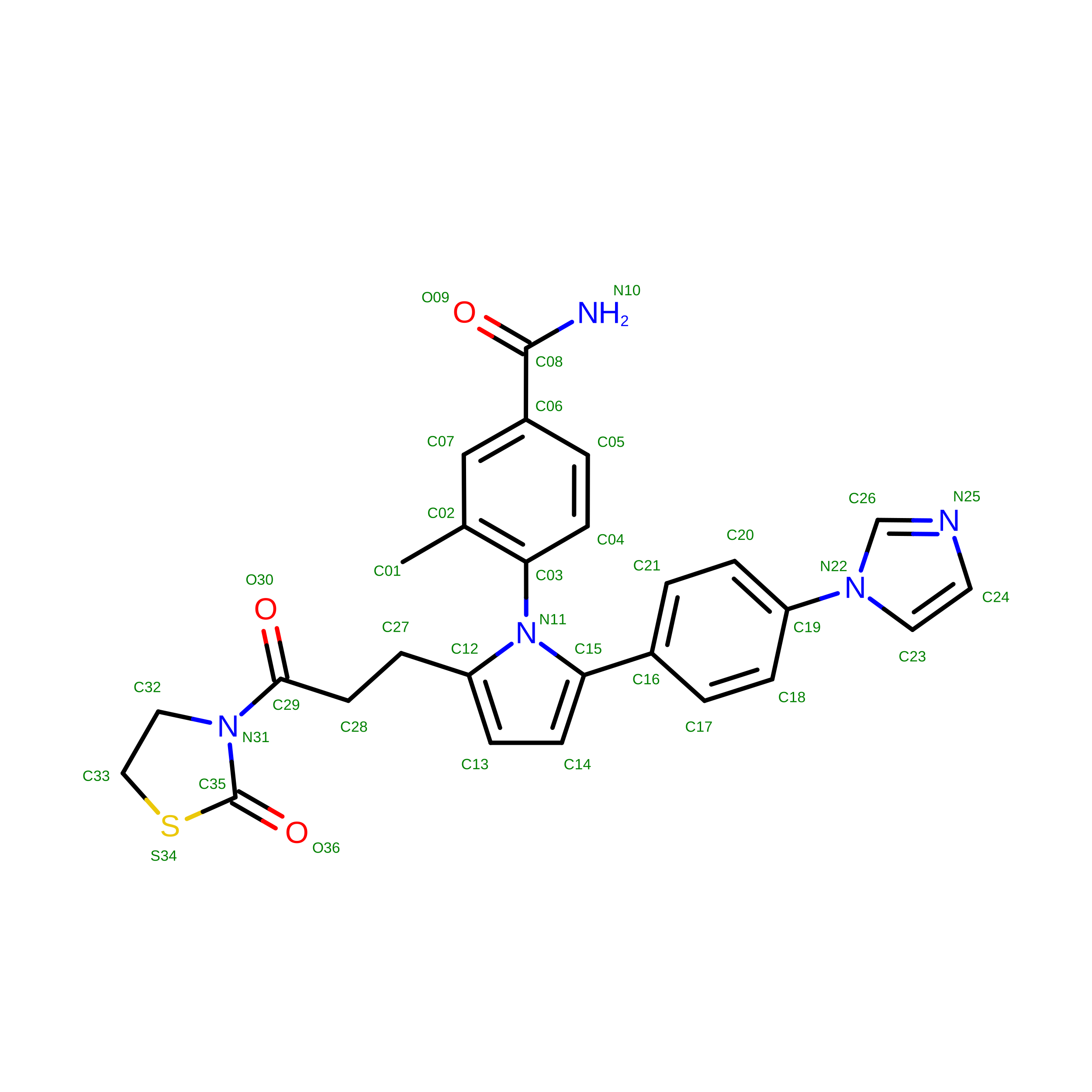
Endothelial dysfunction is one of the earliest processes in diabetes and a major contributor to diabetic vascular complications, which often exhibit limited response to glucose-lowering therapies. We identified up-regulated S -nitrosoglutathione reductase (GSNOR) as a critical factor associated with diabetic vascular complications by unbiased proteomics. Elevated GSNOR expression was observed in the endothelium of patients with type 2 diabetes and in streptozotocin (STZ)-induced type 1 diabetes mice as well as in db/db type 2 diabetes mouse models. Genetic ablation of endothelial Gsnor promoted angiogenesis, maintained vascular permeability, and improved vasodilation in type 1 diabetes mice induced by STZ. GSNOR deficiency protected against high glucose-induced endothelial dysfunction in vitro, as evidenced by rescued tube formation, enhanced spheroid sprouting, maintained barrier integrity, and reduced permeability. Mechanistically, GSNOR orchestrated endothelial dysfunction independently of its enzymatic activity by binding the transcription factor ETS-related gene (ERG) and triggered its nuclear export through chromosome region maintenance 1. We synthesized NYY-001, an oral agent, that selectively blocks the GSNOR-ERG interaction. The direct targeting of NYY-001 to GSNOR was determined by resolving the crystal structure of their complex using cryo-electron microscopy. NYY-001 treatment enhanced postischemic neovascularization and restored vascular permeability in the peripheral vasculature in STZ-induced type 1 diabetes and db/db type 2 diabetes mouse models. These findings reveal a mechanistic role for the GSNOR-ERG complex in diabetic vascular complications and highlight NYY-001 as a promising therapeutic candidate.
- Key Laboratory of Drug Targets and Translational Medicine for Cardio-cerebrovascular Diseases; Medical Basic Research Innovation Center for Cardiovascular and Cerebrovascular Diseases, Ministry of Education; Key Laboratory of Targeted Intervention of Cardiovascular Disease; Collaborative Innovation Center for Cardiovascular Disease Translational Medicine, Nanjing Medical University, Nanjing 211166, China.
Organizational Affiliation: