Download Mendeley
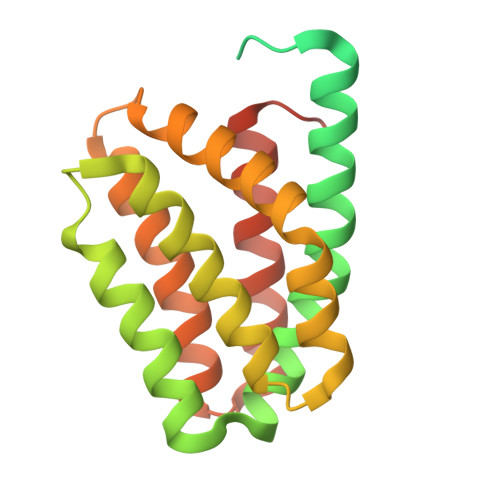
Development of D2HG biosensors inspired by the molecular mechanism of D2HG regulation of DhdR.
Wang, B., Luo, S., Sun, P.(2025) Cell Chem Biol 32: 1397-1411.e7
- PubMed: 41202821
- DOI: https://doi.org/10.1016/j.chembiol.2025.10.004
- Primary Citation of Related Structures:
9JPJ, 9JPK, 9JPL, 9VKN - PubMed Abstract:
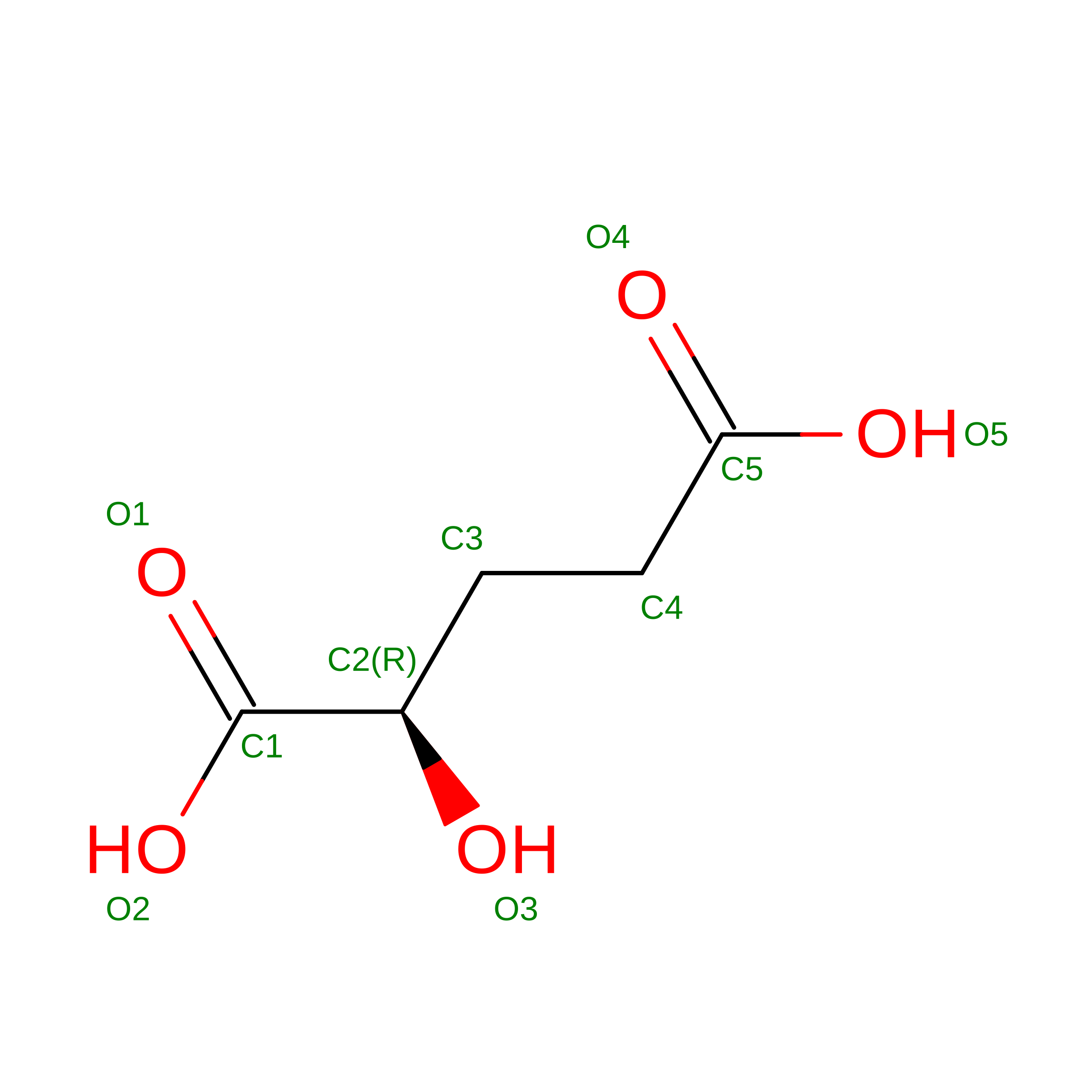
Mutant isocitrate dehydrogenases (IDH1/IDH2) catalyze the conversion of α-ketoglutarate (αKG) to D-2-hydroxyglutarate (D2HG), a hallmark of many lower-grade gliomas. Elevated D2HG levels promote tumorigenesis through epigenetic reprogramming and immunosuppressive mechanisms, although paradoxically, D2HG can also inhibit tumor growth. To explore D2HG's biological functions, we developed genetically encoded D2HG biosensors (DHsers) based on the prokaryotic transcriptional regulator DhdR. Structural analysis of DhdR, including its apo form, D2HG-bound complex, and DNA-bound complex, revealed that D2HG binding induces DhdR conformational changes that regulate DNA interaction. Leveraging these insights, we engineered biosensors (DHsers) that detect a wide range of concentrations of D2HG (0.3-30 mM) with high sensitivity. We also established a standardized protocol for quantifying subcellular D2HG levels in living cells. Notably, STING activation promotes D2HG production, suggesting a role of D2HG in immune modulation. Our findings reveal D2HG-induced transcriptional regulation in prokaryotes, offering a platform for studying the role of D2HG in cellular metabolism and tumorigenesis.
- Research Center of Neurobiology, Shanxi University of Chinese Medicine, Jinzhong 030619, China; Basic Laboratory of Integrated Traditional Chinese and Western Medicine, Shanxi University of Chinese Medicine, Jinzhong 030619, China.
Organizational Affiliation: