The receptor-binding domain (RBD) of the SARS-CoV-2 spike (S) protein continues to evolve, facilitating antibody evasion. It remains unclear whether any conserved RBD epitopes persist across SARS-CoV-2 variants and whether vaccination and/or breakthrough infection (BTI) can elicit antibodies capable of targeting these conserved regions to counter future variants. Here, using a heterogeneous double-bait single B-cell sorting strategy, we identify a subset of antibodies with broad-spectrum RBD binding, including recognition of SARS-CoV-1 and emerging variants such as EG.5.1, BA.2.86, JN.1, and KP.2/3. These broadly binding antibodies (bbAbs) exhibit elevated levels of somatic hypermutation but are infrequently derived from clonally expanded B lymphocytes. Passive transfer of representative bbAbs reduces viral infection in a male hamster model. Structural analyses reveals that these bbAbs primarily target three distinct, highly conserved RBD epitopes, suggesting potential regions of future mutational pressure and highlighting the presence of conserved and immunogenic RBD conformations that may serve as a foundation for the development of broadly protective vaccines.
Organizational Affiliation:
Key Laboratory of Medical Molecular Virology (MOE/NHC/CAMS), Shanghai Institute of Infectious Disease and Biosecurity, Shanghai Frontiers Science Center of Pathogenic Microorganisms and Infection, Shanghai Fifth People's Hospital, Shanghai Key Laboratory of Medical Epigenetics, Institutes of Biomedical Sciences, School of Basic Medical Sciences, Fudan University, Shanghai, China.
Shanghai Sci-Tech Inno Center for Infection & Immunity, National Medical Center for Infectious Diseases, Huashan Hospital, Institute of Infection and Health, Fudan University, Shanghai, China.
Shanghai Pudong Hospital, Fudan University Pudong Medical Center, Shanghai Institute of Infectious Disease and Biosecurity, State Key Laboratory of Genetic Engineering, MOE Engineering Research Center of Gene Technology, School of Life Sciences, Fudan University, Shanghai, China.
State Key Laboratory of Emerging Infectious Diseases, Department of Microbiology, School of Clinical Medicine, Li Ka Shing Faculty of Medicine, The University of Hong Kong, Pokfulam, Hong Kong Special Administrative Region, Hong Kong, China.
Microbiological Testing Department, Baoshan District Center for Disease Control and Prevention, Shanghai, China.
Department of gastroenterology, Jingan District Central Hospitals, Fudan University, Shanghai, China.
Laboratory of Molecular Immunology, The Rockefeller University, New York, NY, USA.
Fundamental Research Center, Shanghai Yangzhi Rehabilitation Hospital (Shanghai Sunshine Rehabilitation Center), School of Medicine, Tongji University, Shanghai, China.
Experimental Immunology Branch, Center for Cancer Research, National Cancer Institute, National Institutes of Health, Bethesda, MD, USA.
Department of Transfusion Medicine, Shanghai Huashan Hospital, Fudan University, Shanghai, China. xiarongcn@126.com.
Key Laboratory of Medical Molecular Virology (MOE/NHC/CAMS), Shanghai Institute of Infectious Disease and Biosecurity, Shanghai Frontiers Science Center of Pathogenic Microorganisms and Infection, Shanghai Fifth People's Hospital, Shanghai Key Laboratory of Medical Epigenetics, Institutes of Biomedical Sciences, School of Basic Medical Sciences, Fudan University, Shanghai, China. wufan@shmu.edu.cn.
Key Laboratory of Medical Molecular Virology (MOE/NHC/CAMS), Shanghai Institute of Infectious Disease and Biosecurity, Shanghai Frontiers Science Center of Pathogenic Microorganisms and Infection, Shanghai Fifth People's Hospital, Shanghai Key Laboratory of Medical Epigenetics, Institutes of Biomedical Sciences, School of Basic Medical Sciences, Fudan University, Shanghai, China. llsun@fudan.edu.cn.
Shanghai Pudong Hospital, Fudan University Pudong Medical Center, Shanghai Institute of Infectious Disease and Biosecurity, State Key Laboratory of Genetic Engineering, MOE Engineering Research Center of Gene Technology, School of Life Sciences, Fudan University, Shanghai, China. pengfei_wang@fudan.edu.cn.
State Key Laboratory of Emerging Infectious Diseases, Department of Microbiology, School of Clinical Medicine, Li Ka Shing Faculty of Medicine, The University of Hong Kong, Pokfulam, Hong Kong Special Administrative Region, Hong Kong, China. hinchu@hku.hk.
Key Laboratory of Medical Molecular Virology (MOE/NHC/CAMS), Shanghai Institute of Infectious Disease and Biosecurity, Shanghai Frontiers Science Center of Pathogenic Microorganisms and Infection, Shanghai Fifth People's Hospital, Shanghai Key Laboratory of Medical Epigenetics, Institutes of Biomedical Sciences, School of Basic Medical Sciences, Fudan University, Shanghai, China. wangqiao@fudan.edu.cn.
JA [auth C] KA [auth C] LA [auth C] MA [auth B] NA [auth B]
JA [auth C], KA [auth C], LA [auth C], MA [auth B], NA [auth B], OA [auth B], PA [auth B], QA [auth B], RA [auth A], SA [auth A], TA [auth A], UA [auth A], VA [auth A]
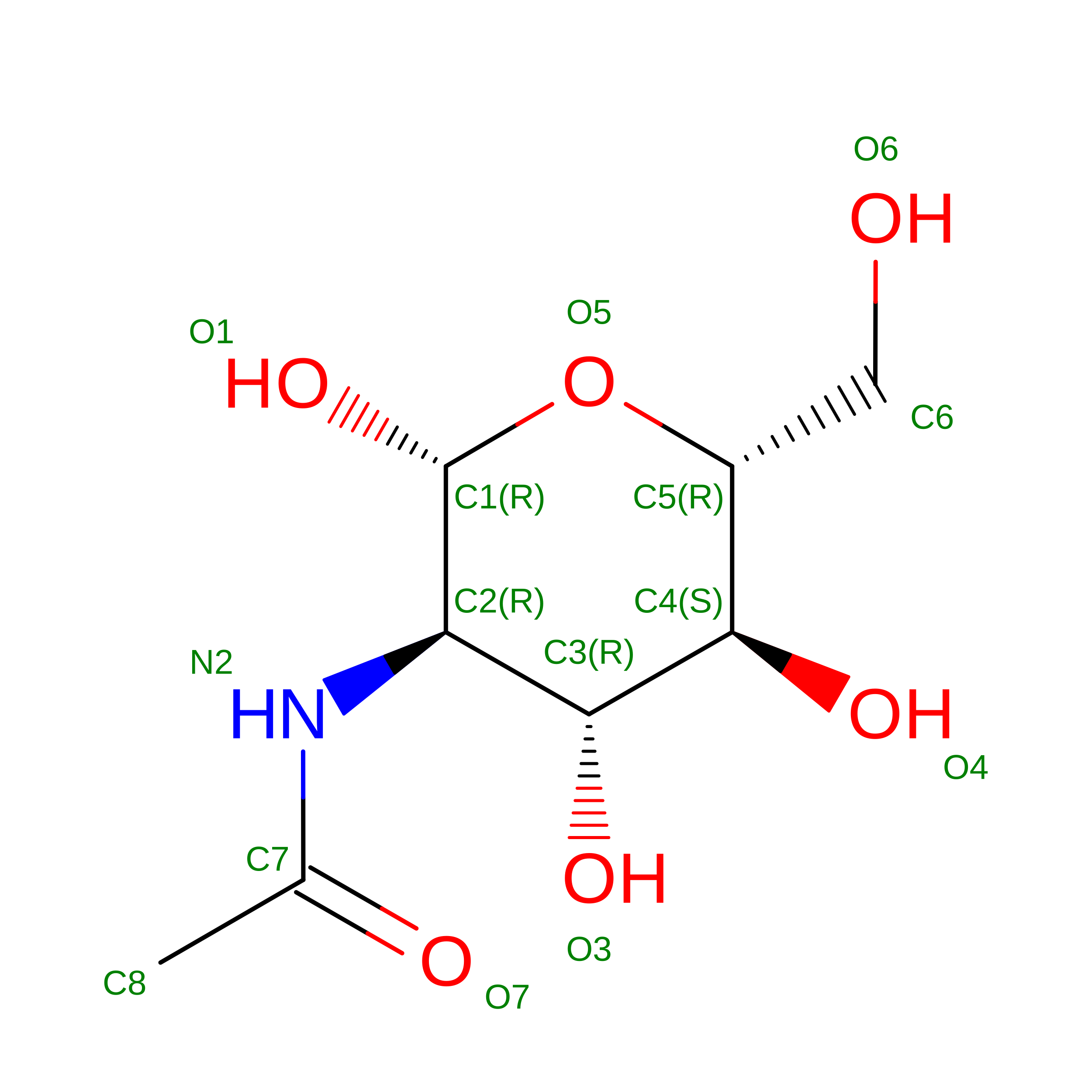
2-acetamido-2-deoxy-beta-D-glucopyranose C8 H15 N O6 OVRNDRQMDRJTHS-FMDGEEDCSA-N








 Download Mendeley